
You know the signs. Work’s not moving. People are prickly—or just plain quiet. Conversations feel awkward. Side chats are on the rise. Progress has slowed to a crawl.
Something’s off...
- Team progress stalls—despite plenty of resources.
- Meetings feel either flat or overly fiery.
- People start working around each other, not with each other.
- Some voices dominate while others disappear.
- Team members leave meetings drained, not energised.
When this happens, it’s a sign to pause, zoom out, and look at what’s really going on.
Helpful vs Unhelpful Conflict
A bit of healthy tension is often a sign of a thinking, engaged team. The challenge for leaders is telling the difference between helpful and unhelpful conflict—and knowing what to do next.
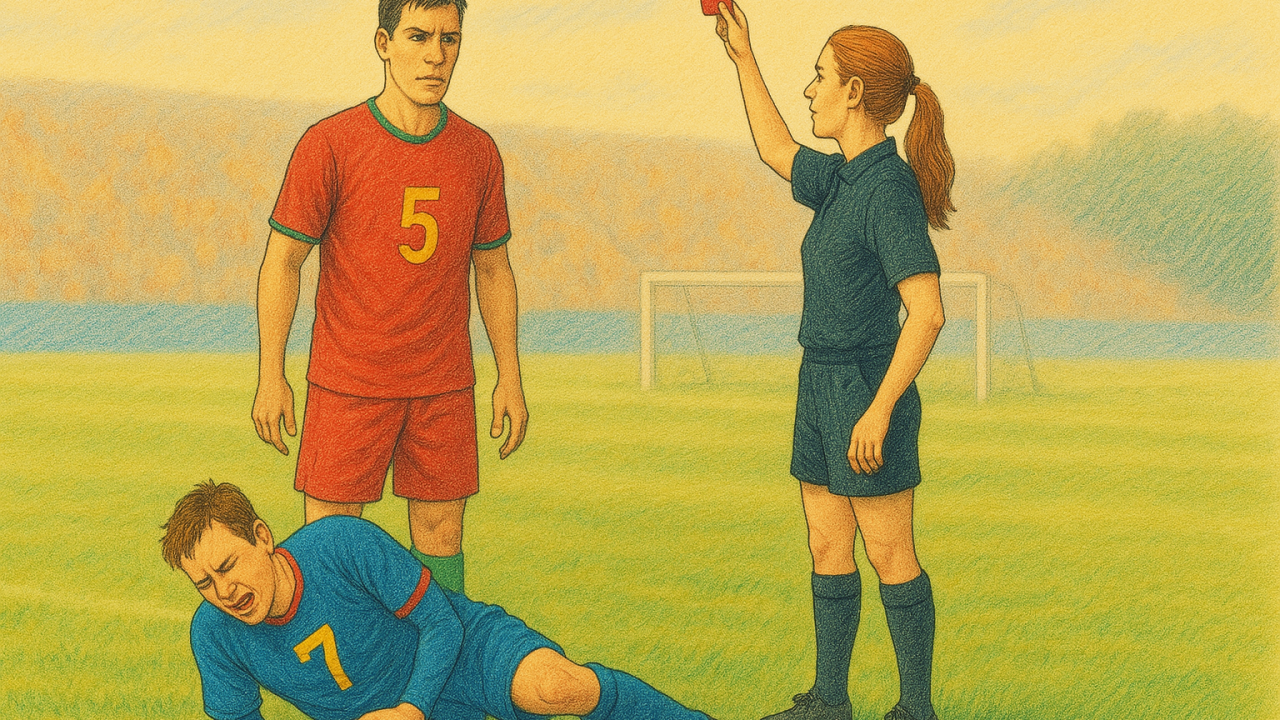
Think of it like footy:
Helpful conflict plays the ball. It’s about the game—getting the job done, solving the right problems, and moving the team forward. There might be some heat and hustle, but the focus stays on the goal, not the players. It’s competitive in a good way, where people challenge each other to lift, think better, and get a stronger result.
Helpful conflict sounds like:
“I see it differently—here’s why.”
“What if we tried it this way instead?”
Unhelpful conflict plays the person. It’s less about progress and more about ego. Instead of going after the issue, people start going after each other. Blame, snide remarks, digging up old stuff—suddenly it’s not about the ball at all. And just like in footy, when you start swinging at people instead of playing the game, things get messy fast. Penalties, broken trust, and a team that’s more distracted than driven.
Unhelpful conflict sounds like:
“They always do this.”
“No point speaking up—they’ll just ignore it.”
As leaders, our job isn’t to referee every disagreement. It’s to create the conditions that help teams keep their focus on the ball. That means setting up clarity, rhythm, and trust—so people don’t feel the need to play dirty just to be heard or get ahead. When people resort to personal digs or passive resistance, it’s often because the system hasn’t given them a fair or effective way to play the game.
So when things feel like they’re starting to go off track, understanding the source of the conflict can help you course-correct before issues escalate.
The Four Common Types of Team Conflict
(And what to do about each one)
Most dysfunction stems from just a few sources. Once you can spot the type, you can choose the right intervention—and stop it turning toxic.
1. Task Conflict
What are we actually doing?
Symptoms:
- People disagree on what the actual problem is
- Arguments over facts, data, or evidence
- Different views on what success looks like
- Competing priorities or timelines
Can sound like:
“That’s not the right approach” or “We should be focusing on X, not Y.”
Helpful when: It surfaces competing priorities/goal conflict or unclear goals. When handled well—often leads to better decisions.
Unhelpful when: No one agrees what matters and progress stalls.
2. Process Conflict
How are we doing the work?
Symptoms:
- Confusion over who’s doing what
- Frustration with how work is being organised
- Disputes over timelines, methods, or tools
- Repeated breakdowns in handover or coordination
Can sound like:
“Why are we doing it that way?” “Why am I always chasing this?”
Helpful when: It improves the way work gets done.
Unhelpful when: People start protecting turf or ignoring processes. Draining if not resolved.
3. Values Conflict
Why are we doing it this way?
Symptoms:
- Strong emotional reactions
- People feel personally offended or disrespected
- Conflict tied to identity, culture, or personal principles
- Often hard to ‘solve’ with facts or compromise
Can sound like:
“That’s not how we treat people.” “This doesn’t sit right with me.”
Helpful when: It reveals what people care about.
Unhelpful when: It gets personal or moralistic. Can run deep and become toxic if ignored.
When the first three types of conflict go unaddressed for long enough, they often evolve into the fourth: interpersonal conflict. At this point, emotions have spilled over. People have spoken or acted in ways that have triggered personal offence. This is often the most destructive form of conflict—and the most difficult to resolve.
4. Interpersonal Conflict
It’s not about the work anymore.
Symptoms:
- Eye-rolls, sarcasm, or cold silences
- People avoid each other or go around each other
- Ongoing tension that pops up in different situations
- Misunderstandings or negative assumptions
Can sound like:
“They don’t respect me.” “I’m done trying with them.” “I just don’t trust them.”
Unhelpful. Every time. Reduced productivity. Eroded trust. Drained energy. There’s nothing helpful about this type of conflict going unchecked. Left alone, it can even seep into the culture—creating silos, fuelling passive-aggressive behaviours, and making the team feel generally unsafe.
It doesn’t just impact the individuals involved. It pulls everyone into the fog.
Leading Through Conflict Without Fuelling the Fire
Once you’ve got clarity on the conflict type, here’s a quick cheat sheet for how to respond:
The Only Way Is Through
When it comes to conflict, it can be tempting to work around it, avoid it, or even try to bulldoze over it. But here’s the truth:
The only way through conflict is to go through it.
With clarity. With curiosity. And with a steady hand.
Unresolved tension doesn’t go away—it just goes underground, where it does more damage.
The best leaders don’t shy away from the hard stuff. They create safe space for their teams to challenge ideas, not attack each other. They build conditions where people can speak up, disagree, and stay focused on the work—not the politics.
Because when teams learn to play the ball—not the person—everyone wins. And the game gets a whole lot better.
At Tenaxiti, we help leaders create the conditions for healthy teams and healthy conflict—because progress and performance rely on both.
Whether you’re:
- Building proactive team habits through values alignment, team diagnostics, and leadership development, or
- Needing responsive support with conflict resolution, mediation, or targeted coaching…
We’ve got the tools, frameworks, and experience to help you go through the hard stuff—not around it.
Keen to explore what this could look like for your team?
Let’s chat. Anthony@tenaxiti.com.au
Or visit tenaxiti.com.au to learn more.