Most conversations about a leadership team are really conversations about the people in it. Who is strong where. Who needs support. Who is ready for more. That is a reasonable way to understand individuals. It is not a way to understand a team.
A leadership team has a personality of its own. It has a collective default that shapes how it sets strategy, absorbs change, handles disagreement and builds trust. It is not the sum of the individuals in it. A team can be made up of capable, well-regarded leaders and still be collectively cynical, or collectively cautious, with no individual anywhere near responsible for it.
I notice it first in the debriefs. Working through a leadership group one at a time, the same habit gets described to me from opposite sides of the table — one person naming it as the thing that frustrates them, another naming it as the thing that keeps the place safe. Neither of them is describing a person. They are both describing the place they work in.
What research says about team-level personality

Research across 141 teams and more than 1,300 team members found that a team's average profile is linked to how well the team does on strategy, innovation, change, trust and resilience.
Some of it is what you would expect. Teams whose collective profile leans toward noticing how things land on people rate higher across most measures. That is not the same as avoiding conflict, and the distinction matters. Teams whose collective profile leans sceptical rate lower on nearly as many.
Some of it is not what you would expect. Teams that place a high value on socialising together rate lower on trust, not higher. The likely reason is that the quality of contact matters more than the amount of it — which should give pause to anyone whose plan for a struggling team is another dinner.
Four patterns leadership teams share without noticing
What makes a shared pattern hard to spot is that every one of them has a flattering name, and the team is already using it. When we take the team picture back to the group, this is usually the moment the room goes quiet — not when the pattern is named, but when someone recognises the word they have been using for it.
1. Collective scepticism
The team calls it rigour. Ideas get tested before they get explored, and every proposal meets its objection first.
2. Collective caution
The team calls it discipline. A group that prizes certainty makes fewer wrong calls and fewer bold ones.
3. Collective independence
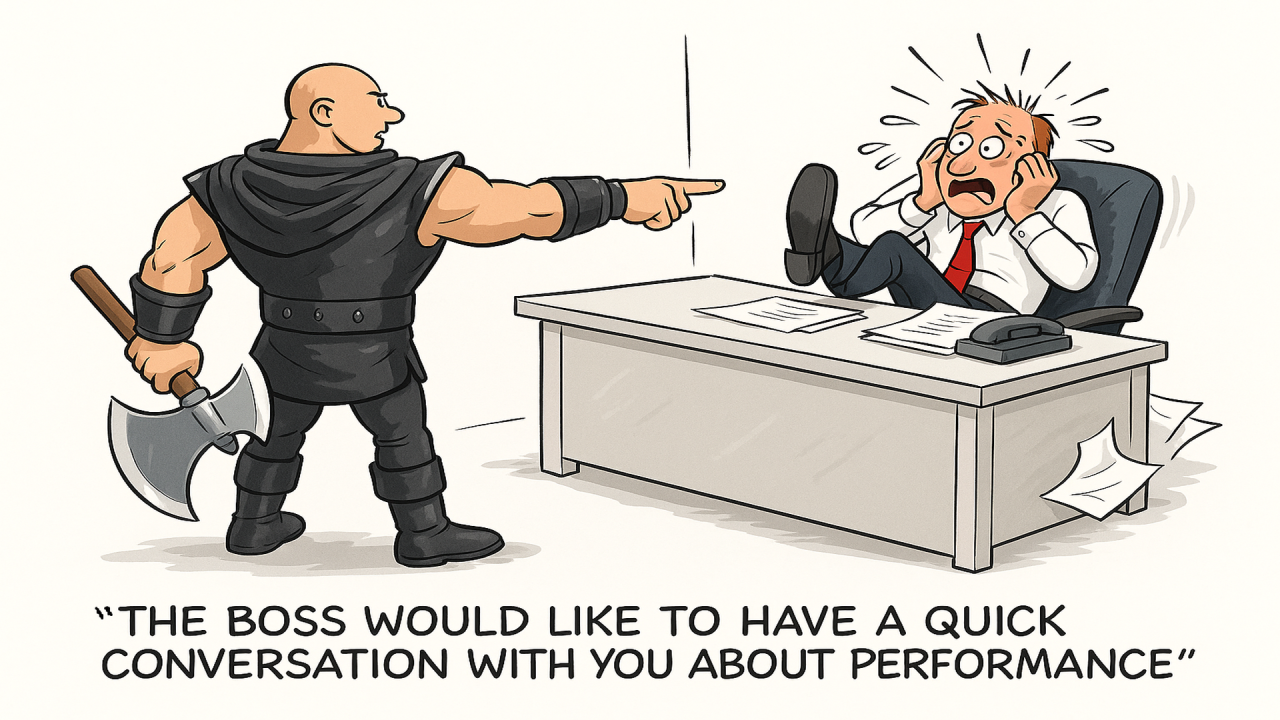
The team calls it accountability. Each leader runs their patch well, and requests falling outside it meet polite delay.
4. Collective agreeableness
The team calls it alignment. Meetings are pleasant and short, decisions are consensual, and the hard thing does not get said.
This fourth pattern carries a caveat, because the research points the other way: teams inclined toward consensus rate higher on trust and collaboration. But those ratings come from the team members themselves. A harmony-seeking team reporting that it trusts itself is exactly what a harmony-seeking team would report. That is not a flaw in the research. It is what you get when you ask people about themselves. It is also why a team's own view of its culture is worth having and not worth relying on.

Why the people inside a team cannot see it
A collective default is invisible from inside because everyone shares it. The people best placed to notice are the least equipped to, because it matches their own instinct.
That includes whoever sits at the head of the table. Teams learn from what that person rewards, tolerates and reacts to. If disagreement has been costly in those meetings even once, the group has learned it. If the risk-averse option is the one that gets approved, the group has learned that too.
In the session where we take the team picture back to the leader who commissioned it, this is rarely news. Once the pattern is on the table, some version of “that is me, isn't it” arrives within a minute. It is usually said with relief rather than defensiveness, because a pattern you can see is easier to carry than a vague sense that something is not working.
None of this is about labelling anyone. Personality data at team level is not a set of categories for individuals. It is shared language for something the group is doing, so it can be discussed as a pattern rather than as an argument about who is difficult.
What different assessment tools actually measure
Plenty of tools measure a team, and most of them measure what the team says about itself — how members rate trust, conflict, accountability, whether meetings work. That is worth knowing, and it is also the thing most shaped by the default. A cautious team reports that it is disciplined.
Style tools sit somewhere in between, and they earn their place. DiSC and its equivalents give a team fast, accessible language for how people prefer to work, and a group that can name its own styles handles friction better than one that cannot.
What neither is built for is what happens under pressure. The Hogan suite measures three things separately: how someone operates day to day, what tends to come out when they are under load or too comfortable, and what they need from a job to stay engaged.
That matters here because a collective default shows up under pressure. It is not what the team does on a good Tuesday. It is what the team reaches for when the quarter tightens.
How the pattern gets found
The work runs in two layers.
Each leader completes the assessments, then sits down for ninety minutes to work through what came back — what they do well, what surfaces under pressure, what drives them. We don't split that work up: the psychologist who interprets the instruments is the one who writes the report and sits in the room, because an interpretation handed to someone else to deliver arrives without the reasoning behind it. That layer stands on its own. It is worth doing for each leader whether or not anyone ever looks at the set.
The second layer is where the group appears. Read one at a time, a preference is a personal characteristic. When I read the set together, the same preference turning up in six or seven of them is no longer a characteristic. It is how the organisation decides.
Then it goes back to both. To each leader, as something they contribute to and can adjust. And to the team, in the room together. A default that only the chief executive knows about is a piece of information. A default the team can see is something the team can change.
Why individual coaching cannot fix a team problem
Here is where it usually goes wrong.
A leadership team stops holding together, and the response is individual: coaching for the two who are struggling, development plans, a round of 360s. All of it is good work. All of it is aimed at a different level. If the problem belongs to the group, working on people one at a time cannot reach it. Every leader can get measurably better and the collective default stays exactly where it was.
These are sequence, not substitutes. Read the individuals, find what the group does, change the conditions holding it in place, then coach into the space that opens. Coaching lands far better on the far side of that work than in place of it.
What a group does responds to conditions. Who speaks first. Whether disagreement has a protocol or has to be brave. What happens to the person who raises an unwelcome risk. Which decisions need consensus and which do not. Those are design choices, and they are the levers that move a default. Disagreement is the one most worth designing deliberately. Conflict comes in more than one form, and a team's default decides which form it permits.
A test you can run this week
No data is needed to start looking. What is needed is a question the team cannot coordinate on.
Ask each leader, separately and in writing, before any group discussion: what is the single biggest risk to this business over the next twelve months?
If the answers scatter, that is a misalignment problem, and it is well-understood territory.
If they all say the same thing, resist the relief. That is either a genuinely aligned team or a group of people who cannot see the same thing, and from inside the room those look identical. So ask a second question: what would have to be true for all of us to be wrong about this? A team that cannot answer that has just shown you the edge of what it can see. My co-director Anthony Gibbs makes a related case for asking your team three questions separately.
One caution before you go looking. An average can be produced two ways. A team that reads as moderately cautious might be seven moderately cautious people, or three who will not move without certainty and four who back a call on instinct. Same average, completely different team, completely different work. Where a team converges is one problem. Where it splits — opposing instincts, competing values, the argument that comes back every time the pressure rises — is another, and it needs a different kind of answer.
None of this needs a big intervention. It starts with looking at the team differently. It is not a group of individuals to manage one at a time, but one thing with its own habits and preferences. Seen that way, behaviour that looked random starts to have a reason. Why a good idea quietly died, why the same decision keeps coming back, why the last senior hire didn't stay.
Our Leadership Team Profiling and Development Program reads a leadership team both ways: each leader individually, then the group as one picture.
The team-level research referenced in this piece is drawn from Peter Berry Consultancy's whitepaper, Personality & High Performing Teams (Berry, 2022).