Designing an offsite that actually changes things

An offsite is one of the most expensive things a leadership team does. Two days of the organisation's most senior people, plus travel, accommodation, and the opportunity cost of everything else not getting done. Treated carelessly, it produces a glossy deck and fading goodwill. Treated seriously, it can change the trajectory of a team for twelve months.
The result of an offsite is determined before anyone walks in the room. Teams that do the pre-work — surfacing real tensions, aligning on what the session is actually for, briefing participants honestly — arrive ready to make decisions. Teams that skip it arrive ready to perform alignment they don't yet have.
Facilitation in the room matters, but less than people expect. The most effective facilitation moves are structural: starting with the hardest conversation rather than warming up to it, naming the undiscussables early, building decision-making moments into the design rather than leaving them to emerge. A session that ends with clear owners and dates on every commitment beats a session that ends with inspired energy and no follow-through.
The 90 days after the offsite are where value is captured or lost. Most teams return to work, re-enter their operational cadence, and quietly shelve the commitments made in the room. The antidote is not heroic effort — it is a lightweight review structure that keeps the offsite outputs visible and makes it socially uncomfortable to drift.
This session covers the full design envelope: what to do in the four weeks before, how to structure two days so that real decisions get made, and what a 90-day follow-through cadence looks like in practice. The goal is a template you can adapt to your team's next session, not a theory about what good offsites look like.
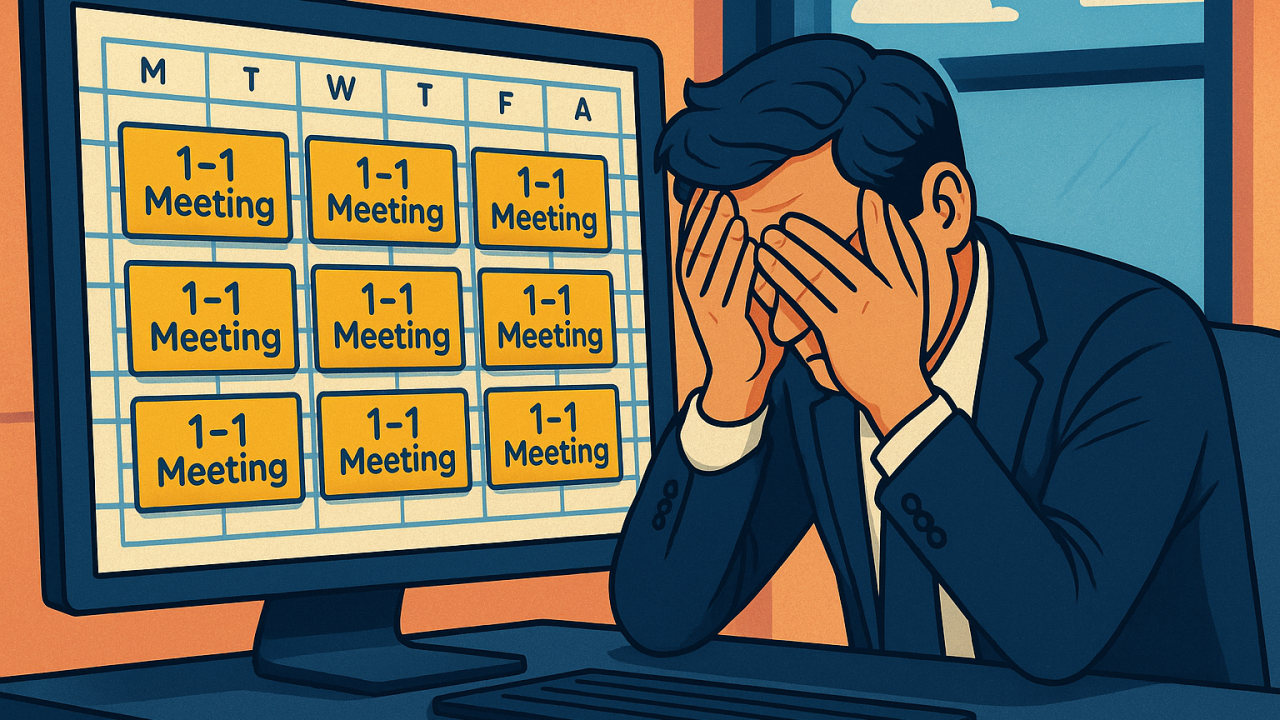
Are your 1:1s just calendar noise?
Anthony Gibbs
Making the complex simple: a leadership team's job
Wed 21 May 2026, 11:00 AEST · 45 min
The one-page strategy your team can repeat
Wed 4 December 2025 · 36 min
Team contracts: what good leadership teams agree out loud
Wed 12 February 2026 · 38 min
The bridge that links behaviours to business goals
Anthony Gibbs
Treat your meeting cadence like a product
Wed 11 September 2025 · 38 min
Struggling to get people on board with your ideas? Try this simple approach
Anthony Gibbs
Execution is often where strategy breaks
Execution, Strategy, Operating RhythmMay 2026 · 10 min read