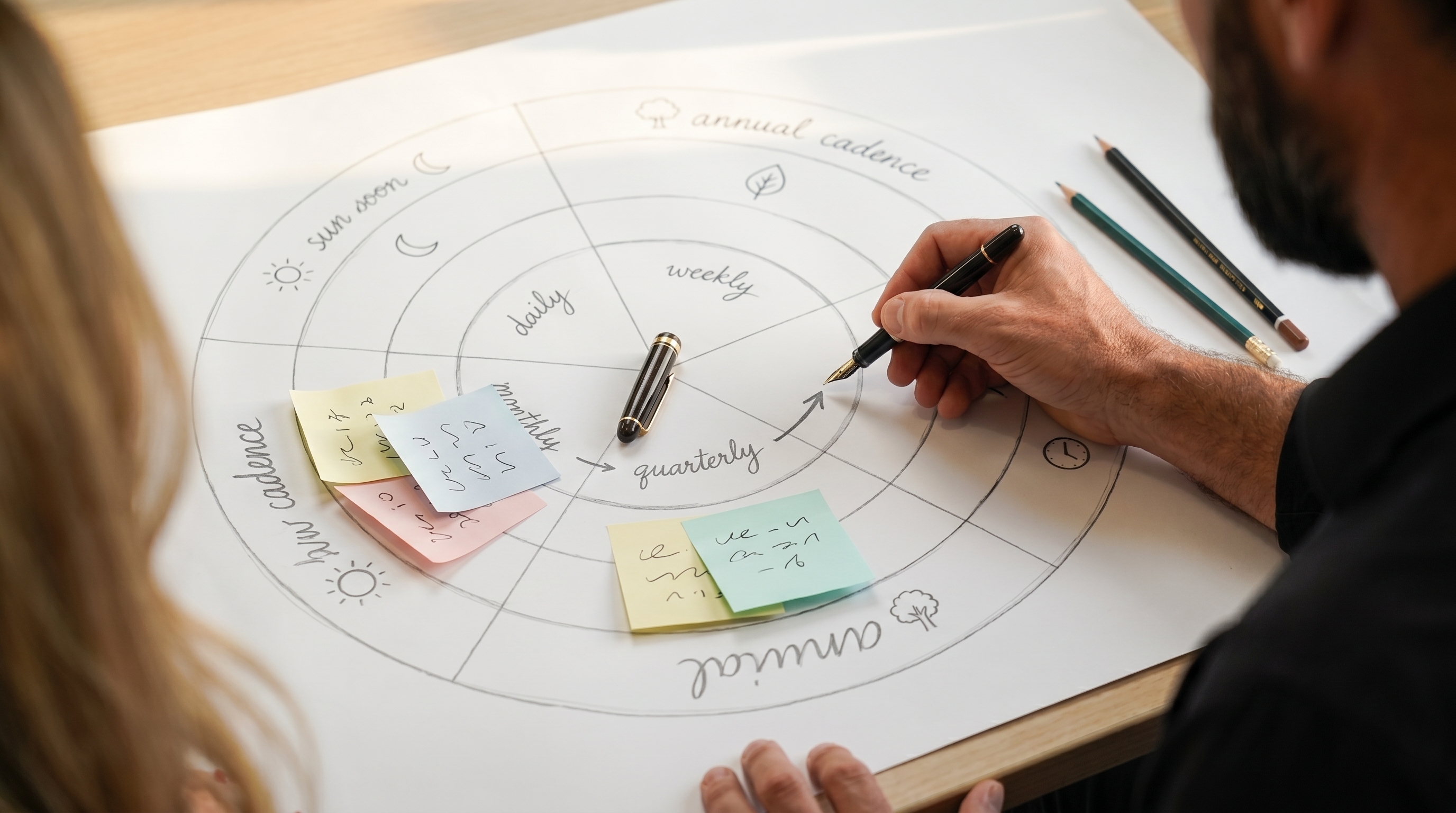
A leadership team's meeting cadence is the operating system of the business. Get it right and the whole team runs sharper. Get it wrong and you'll be busy without ever feeling productive.
Five meeting types, five purposes. Run them on the right cadence and most of the rest takes care of itself.
Daily huddle

Sample agenda
- Headlines (2 min). Share good news, personal or professional, to set a positive tone.
- What's up (3 min). Quick updates on relevant developments from the previous day.
- Priority check (3 min). Each person states their #1 task for the day, starting with "Today I will…"
- Stucks (3 min). Roadblocks or challenges that need attention.
- Wrap-up (2 min). Confirm alignment and end promptly.
Best practices
- Keep it short and on time. Stand to ensure brevity if in person.
- Encourage specificity in updates to enhance clarity.
- Run it at the same time and place daily to establish routine.
- If longer discussions arise, schedule follow-ups outside the huddle.
Weekly tactical
Sample agenda
- Wins and good news (5 min). Share successes to start on a positive note.
- CEO/leader update (5–10 min). Overview of key developments or focus areas.
- Metrics and scorecard review (10–15 min). KPIs and whether the team is on or off track.
- Quarterly priorities review (15 min). Status of quarterly goals (Big Rocks).
- Customer/employee feedback (10 min). Insights from the week to identify patterns or issues.
- Identify, discuss, solve — IDS (30–40 min). Focus on 1–2 pressing issues. Solve collaboratively.
- Action commitments — WWW (5–10 min). Confirm "Who will do What by When."
- One-phrase close (2 min). Each attendee shares a word or phrase summing up the meeting.
Best practices
- Limit issues to 1–2 critical topics.
- Use real-time metrics for data-driven discussions.
- Defer long-term strategic issues to monthly or quarterly meetings.
- Encourage open debate on ideas, not individuals — fosters constructive conflict.
Monthly strategic management
Sample agenda
- Good news and wins (5–10 min). Celebrate achievements from the past month.
- CEO update (5–10 min). Insights on company performance and direction.
- Financial review (15–30 min). Income statement, cash position, and key financial metrics.
- Critical numbers and rocks (20–30 min). Progress on quarterly/annual goals; adjust strategies if needed.
- Strategic training topic (15–30 min). New knowledge, industry insights, or core values.
- Customer and employee feedback (15 min). Trends and key learnings from the field.
- Problem solving — IDS (45–60 min). Focus on the most critical long-term issue or opportunity.
- Action commitments — WWW (5–10 min). Assign responsibilities and set deadlines.
- One-phrase close (2–5 min). Reflect on the meeting.
Best practices
- Dedicate time to strategic issues that need in-depth discussion.
- Incorporate elements of team learning and shared insights.
- Ensure all participants come prepared with the necessary reports and updates.
Quarterly planning
Sample agenda
- Team icebreaker (15 min). Foster connection and set the tone.
- Quarterly retrospective (30–45 min). Reflect on commitments and outcomes from the last quarter — what worked, what didn't, what was learned.
- Financial & operational review (30 min). Performance against quarterly targets.
- Big Rocks planning (60 min). Set 2–3 critical priorities for the upcoming quarter — actions, metrics, owners.
- SWOT/trends (30–45 min). Opportunities, threats, and external trends.
- Strategic training or values alignment (30 min). Long-term vision or core values.
- Action planning (45 min). Detailed plans for the next quarter.
- One-phrase close (5–10 min). Reflect and commit to the plan.
Best practices
- Use this time to align on big-picture goals and reduce day-to-day distractions.
- Make sure action plans are clear and actionable.
- Consider rotating the location around different company sites.
Annual strategic planning retreat
Sample agenda
- Team building (15–30 min). Build rapport and set a collaborative tone.
- Annual retrospective (1 hr). Key accomplishments, lessons learned, missed opportunities.
- Core ideologies review (45 min). Values, purpose, and BHAG (Big Hairy Audacious Goal).
- Strategic deep dive (2–3 hr). Strategy through SWOT or the 7 Strata.
- Financial review (1 hr). Annual performance and targets for the upcoming year.
- Annual goals and Big Rocks (1–2 hr). Set key priorities and align them with quarterly rocks.
- Action plan development (1 hr). Specific steps for execution.
- Schedule and cadence review (30 min). Finalise meeting rhythms and timelines for the year.
- One-phrase close (15 min). Reflect on the retreat and commit to the plan.
Best practices
- Build in moments of celebration and reflection to energise the team.
- Align annual goals with long-term strategic objectives.
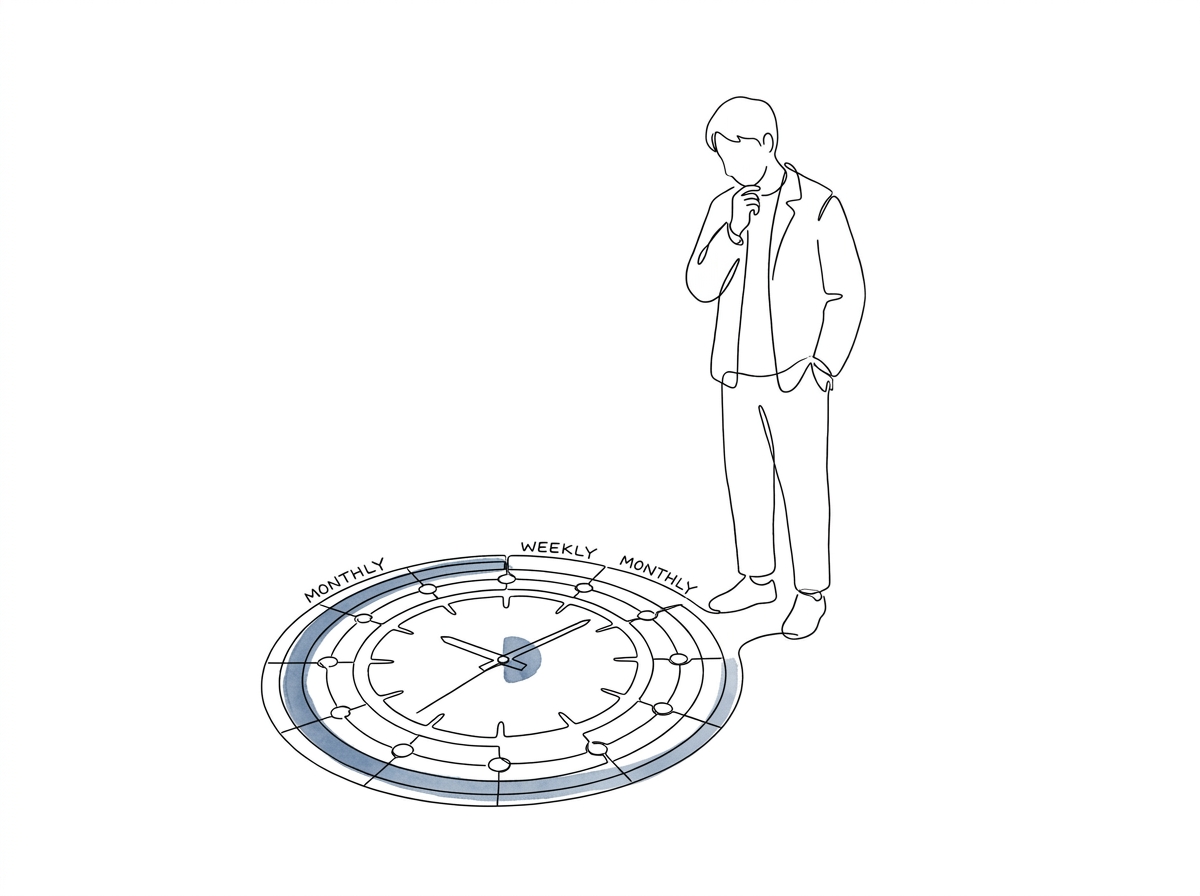
Tips for all meetings
- Keep meetings consistent in time, place, and structure.
- Prepare in advance — share metrics, reports, and agendas beforehand.
- Ensure clear ownership of follow-up actions.
- Encourage open, honest, and focused discussion.
- Avoid overloading agendas — stick to priorities and key outcomes.