
A habit is something we do over and over, usually without thinking about it. In fact, about 40–50% of what we do each day is habit-driven.
Habits make life easier, until they don’t—changing them? Not so easy.
Why Habits Are Hard to Change
Most habits started for a reason. They served us in some way through:
- Saving brain energy
- Providing us a reward of some feel good brain chemical i.e. dopamine
- Providing certainty or a sense of control.
For example, jumping in (the habit I am working on) once helped me move meetings along and/or I have received positive feedback for jumping in with great ideas.
Both realisations were important because it helped me realised that I was being rewarded by my brains chemistry.
When I feel things are moving too slowly, the cortisol builds—along with the adrenaline. The moment I speak my idea, my brain rewards me with a dopamine dump: once for relieving the pressure, and a second time if the idea is actually a good one.
NO WONDER I AM ADDICTED.
The unwanted consequence—both as a leader and a human—is that this habit is doing more harm than good: cutting people off, reducing trust, stifling others’ growth, and, I suspect, occasionally making me look like a bit of a drongo.
Changing a Habit: It’s About Rewriting the Loop
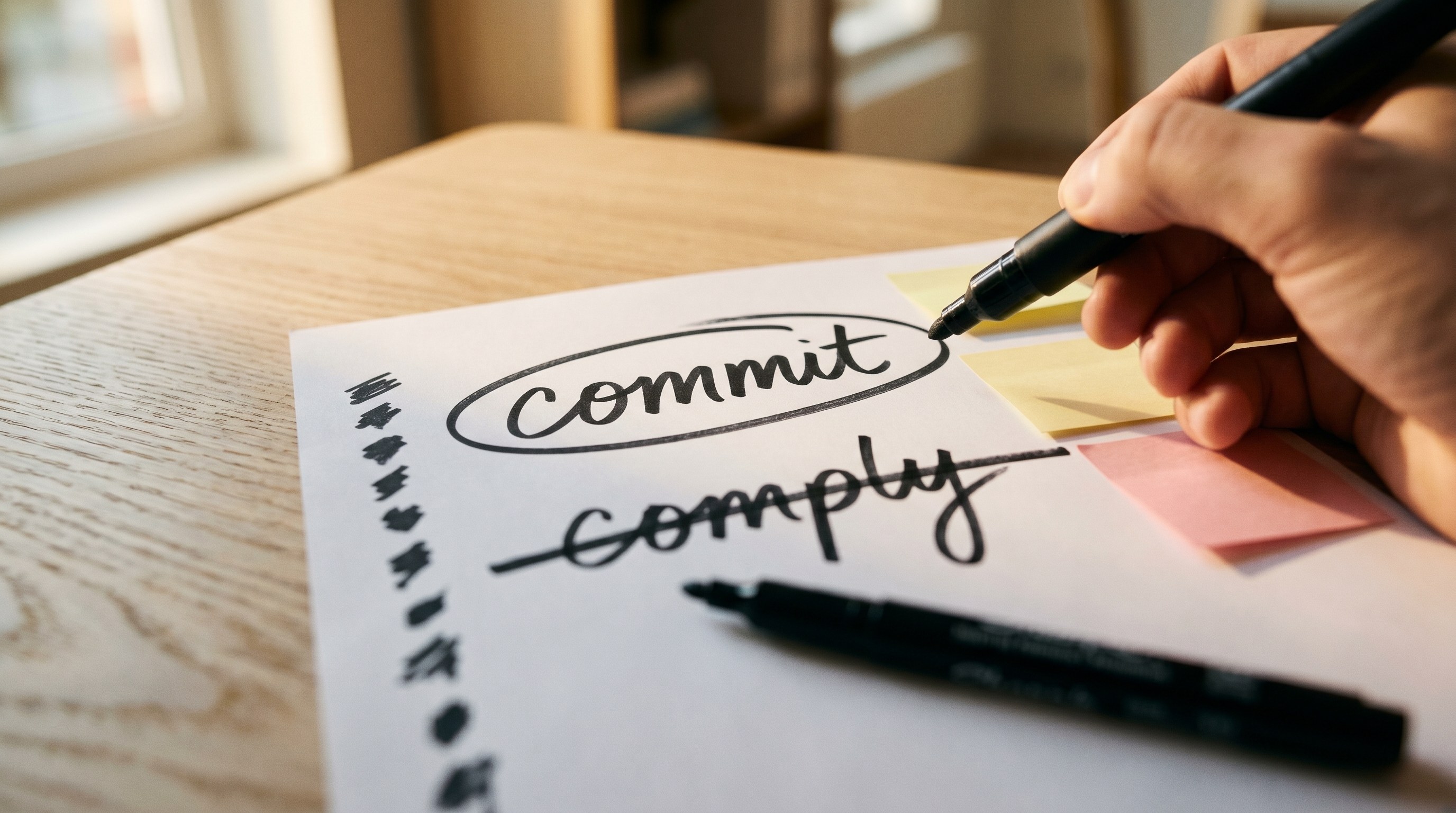
To change a habit, I can’t just stop doing it. I need to change the loop. This is where the Habit Loop comes in:
Cue → Routine → Reward
Let’s walk through how it can play out:
- Cue: A team member is speaking, and I think of a great idea or follow-up point.
- Old Routine: I interrupt to share it or blurt it out as soon as there’s a gap.
- New Routine: I take a breath, hold it, grab a pen, jot the idea down, and stay quiet.
- Reward: I still feel in control, I don’t forget the thought, and I give others space to speak.
Even better? I tick the idea off later if it gets answered naturally during the conversation. That tiny tick gives my brain a satisfying mini “win.”
How I Got There…
Step 1: Get Clear on the Goal and Benefits
Goal: I want to stop interrupting or being the first to answer. I want to become a better listener.
What Success Looks Like — If this habit sticks:
- I’ll interrupt less.
- I’ll understand more.
- My team will feel heard.
- I’ll build stronger trust, enable faster decisions, and encourage more thoughtful conversations.
Step 2: Start Small, in a Specific Setting
I chose meetings as my starting point, with a simple plan: If a thought comes to mind, I write it down instead of saying it out loud.
Step 3: Make It Easy
To help the habit stick, I removed friction:
- I keep a notepad and pen in front of me during every meeting.
- I label a column “Questions” or “Ideas” so I know exactly what to write.
Step 4: Make It Rewarding
Here’s what helps the habit feel good:
- I tick off a question if it gets answered naturally.
- I feel a moment of pride when I’ve held space for someone else to speak.
- I celebrate wins by reflecting on how the conversation flowed better.
Bonus Points: Try Habit Stacking
Once I felt more in control of the habit, I began habit stacking. Now, instead of just holding my ideas, I ask more follow-up questions to understand others’ thinking—not just share mine.
Ready to Try?
Want to change one of your own habits? Start tiny.
- What’s one small change you’ll try today?
- How will you track it? (Notebook ticks? End-of-day reflection?)
- Who will support you? (A coach? Peer? Meeting buddy?)
Remember: Small habits. Big wins.
Want more brain-based tools to boost your productivity or support your team?
Reach out at anthony@tenaxiti.com.au
Or visit Tenaxiti.com.au